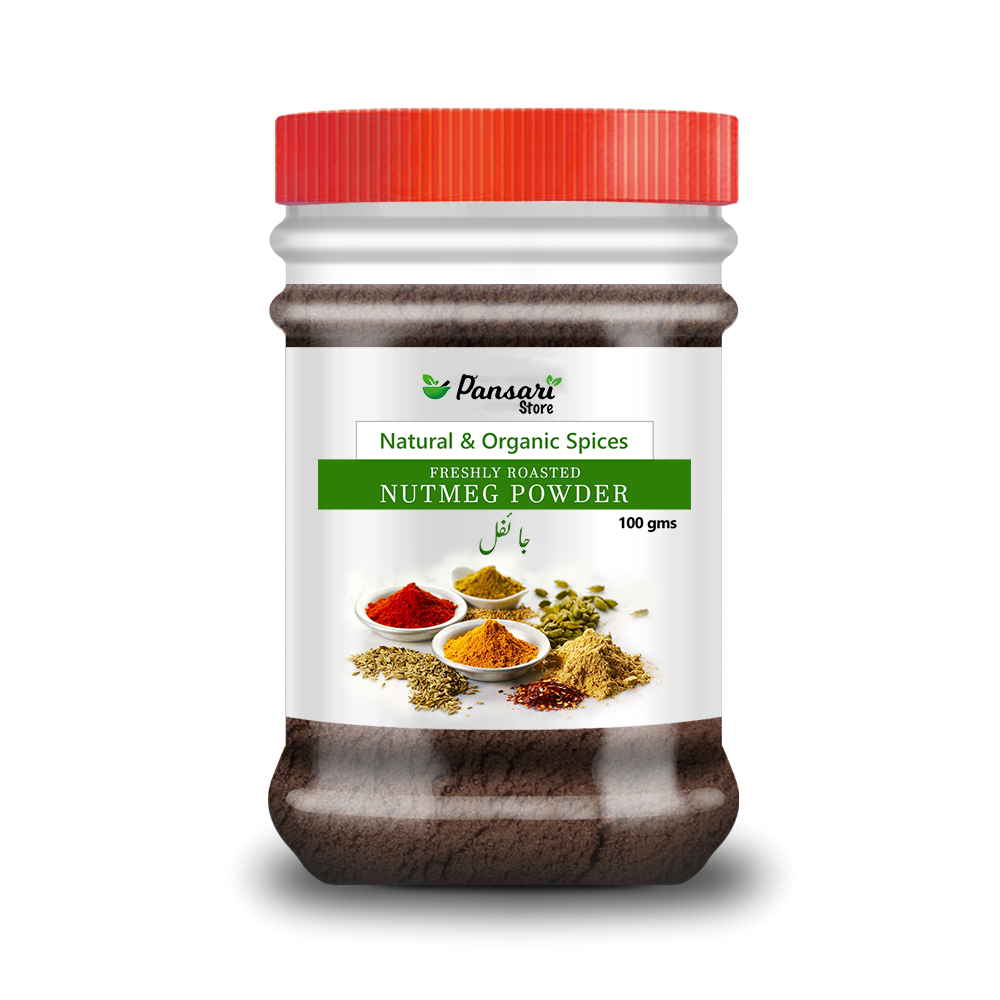
Nutmeg (Jaifal)
جائفل
Rs 550
Nutmeg is one of two spices that grow on an evergreen tree with the scientific classification Myristica fragrans, also known as common nutmeg. It is native to islands near Indonesia but is now a globally used spice. These trees bear nutmeg, which is the seed of the tree, as well as mace, a less common spice derived from the dried reddish shell of the seed. This is the only tree which is the source of two distinct spices in the world. It is commonly grown in the Caribbean, other tropical areas of the world, and also in Southern India in the state of Kerala.
While nutmeg is only a spice that is used sparingly in dishes, it can still impact your health in a variety of ways, mainly due to its nutritive content of vitamins, minerals, and organic compounds related to the essential oils. These beneficial components include dietary fiber, manganese, thiamin, vitamin B6, folate, magnesium, copper, and macelignan.
The information is for educational purposes only. This information has not been evaluated by the Food and Drug Administration.
This information is not intended to diagnose, treat, cure, or prevent any disease.
Related products